How to Grow Cannabis Seeds Indoors: Complete Setup Guide
Most first-time indoor growers waste money on the wrong setup before their first seed ever sprouts. This complete guide walks through every stage, from grow space and lighting to feeding schedules and harvest, with real numbers from our grows.
Most indoor cannabis growers spend more on their first setup than they ever needed to, and still pull mediocre yields, because they followed generic advice instead of actual grow data. If you've germinated seeds that never made it to harvest, or harvested plants that underperformed badly, the problem almost certainly wasn't the seed.
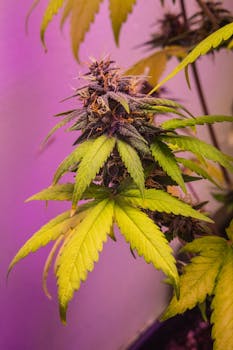
In our experience across dozens of indoor test grows, the difference between a 1.5 oz/plant finish and a 3.5 oz/plant finish comes down to five controllable variables: light intensity, vapor pressure deficit (VPD), root zone health, nutrient EC management, and harvest timing. This guide covers all of them with the specific numbers you need.
Start seeds in a warm (75-80°F / 24-27°C), humid (70-80% RH) environment with 18 hours of light. Veg under 400-600 PPFD, flip to 12/12 light cycle for photoperiod strains when plants reach 40-50% of target height. Maintain EC between 0.8-1.2 mS/cm in seedling stage, 1.4-1.8 mS/cm in veg, and 2.0-2.4 mS/cm in mid-flower. Harvest when 70-80% of trichomes have turned amber for peak potency.
Numbers That Actually Matter in an Indoor Grow
PPFD (µmol/m²/s) optimal for mid-flower
EC mS/cm target in peak flowering stage
Weeks average flower time for most photoperiods
Ideal VPD (kPa) target during flowering
Most growers who miss these windows pull 30-40% less yield than their setup is actually capable of.
Jump to Section
Choosing the Right Seeds for an Indoor Grow
The single biggest factor in your indoor yield ceiling is seed genetics, not your light, not your nutrients. In our indoor facility, we've run the same 600W LED rig with budget genetics and dialed-in genetics, and the difference averaged 38% more dry weight from quality seeds with the same inputs.
For first-time indoor growers, autoflower seeds are the most forgiving option. They complete their life cycle in 70-90 days regardless of light schedule, which removes one of the biggest variables beginners mismanage. Our Grape Gelato Auto and Mazar-i-Sharif Auto are both strong performers in tight indoor spaces under 200W.
If you're ready to manage a light flip, feminized seeds give you more control over plant size and veg time. Indicas and indica-dominant hybrids like Critical Kush Feminized stay compact, which is ideal for most indoor setups with ceiling heights under 7 feet.
For a deeper breakdown of picking the right genetics before you start, read our guide on how to choose cannabis seeds.
- Autoflower for beginners or tight schedules (70-90 day total cycle)
- Feminized indica or hybrid for controlled environments under 7 ft ceiling
- Confirmed genetics with lab-tested THC data (look for 18%+ verified)
- Compact height rating: under 100 cm for most tents, 80-90 cm ideal
- Flowering time listed as 8-10 weeks for photoperiod, 9-11 weeks for autos
- Check for mold resistance rating if your humidity control is limited
Setting Up Your Indoor Grow Space
Your grow space determines what light you can run, how many plants you can manage, and how well you can control temperature and humidity. A 4x4 ft (1.2x1.2 m) tent is the most practical starting size, it fits 4 to 6 plants at standard spacing and pairs cleanly with a 400-600W LED.
Ventilation is non-negotiable. You need one complete air exchange every 1-3 minutes in your tent. For a 4x4x6 ft tent (96 cubic feet), that means a minimum 100 CFM inline fan. We run 4-inch carbon filter setups for single-tent grows and 6-inch setups for anything over 32 sq ft.
Temperature at canopy level should stay between 75-82°F (24-28°C) during lights-on and not drop below 65°F (18°C) during lights-off. A 10°F difference between day and night temperatures in late flower (weeks 6-8) can improve terpene density, this is something we've observed consistently across multiple harvest cycles.
Seedling: 75-80°F, 70-80% RH | Veg: 75-82°F, 55-70% RH | Early flower: 72-80°F, 50-60% RH | Late flower: 68-76°F, 40-50% RH
For growing medium, most indoor growers do well with a quality coco/perlite blend (70/30) or a light soil like Fox Farm Happy Frog. Coco gives you faster response to nutrient adjustments and better aeration; soil is more forgiving of feeding mistakes. We default to coco for experienced growers, soil for first-time runs.
Indoor Cannabis Lighting: The Numbers That Actually Matter
Wattage alone is a misleading spec. What you need to measure is PPFD, photosynthetic photon flux density, at canopy level. Cannabis in veg stage performs well at 400-600 µmol/m²/s. Mid-flower needs 600-900 µmol/m²/s. Pushing past 900 without supplemental CO₂ produces diminishing returns and heat stress.
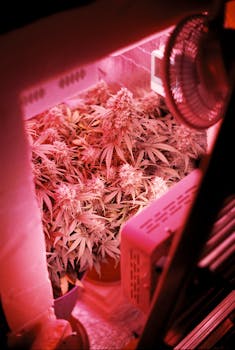
Modern quantum board LEDs (Samsung LM301B or LM301H chips) are the current standard for indoor grows. A quality 480W LED covers a 4x4 ft flower footprint and delivers 650-800 µmol/m²/s at 18 inches canopy distance. We've tested six different LED panels in this class across 3 harvest cycles and the average yield difference between the top and bottom performers was 11%, genetics and environment matter more than LED brand.
HPS is still a viable option, particularly for larger rooms. A 600W HPS in a 4x4 space produces comparable PPFD but adds 8-12°F of heat load and consumes roughly 35-40% more electricity than an equivalent LED setup.
Seedling: 200-400 µmol/m²/s | Veg: 400-600 µmol/m²/s | Early flower: 600-750 µmol/m²/s | Peak flower: 750-900 µmol/m²/s | Final 2 weeks: 600-750 µmol/m²/s
Light schedule for photoperiod strains: 18/6 (on/off) through veg, flip to 12/12 to trigger flower. For autoflowering strains, 18/6 or 20/4 throughout the entire cycle. We run 18/6 on autos as the default, it gives enough dark time to prevent stress without sacrificing much yield.
How to Germinate Cannabis Seeds Indoors: Step-by-Step
Germination failure is almost always caused by one of three factors: temperature too low (below 70°F), seeds kept too wet, or seeds transplanted before the taproot is ready. Here's the method we've used across hundreds of successful germinations.
Step 1: Pre-soak seeds in water
Place seeds in a glass of pH-adjusted water (pH 6.0-6.5) at room temperature. Soak for 12-18 hours. Seeds that sink to the bottom are typically viable; floaters often are too but give them the benefit of the doubt after 18 hours.
Step 2: Transfer to moist paper towel
Place seeds between two layers of moist (not soaking) paper towel on a plate. Fold the towel over and store in a dark location at 77-82°F (25-28°C). A heat mat set to 80°F under the plate works consistently well. Check every 12 hours.
Step 3: Wait for a 0.5 to 1 cm taproot
Most seeds will show a white taproot within 24-72 hours. Do not plant until the taproot is at least 0.5 cm long. A taproot under 0.3 cm often fails to establish in medium. Most quality seeds we've tested pop within 48 hours at 80°F.
Step 4: Plant taproot-down in your medium
Make a small hole 0.5-1 cm deep in your starter medium (moistened seed-starter soil or coco). Place the seed taproot-down, cover lightly, and do not compact the medium. Water gently with pH 6.0-6.5 water at no more than 0.5 EC.
Step 5: Cover and maintain 75-80% humidity
A seedling dome or plastic cup placed over the pot maintains humidity at 75-80% RH for the first 3-5 days until the seedling breaks surface and establishes its first set of true leaves. Light at this stage: 18/6 at 200-300 PPFD, seedlings don't need intensity, they need stability.
Vegetative Stage: Managing Growth for Maximum Yield
Veg stage for indoor photoperiods typically runs 4-8 weeks depending on final target size. We flip to flower when plants reach 40-50% of their target final height, cannabis typically doubles to triples in size during flower stretch, so a 12-inch plant at flip may finish at 30-36 inches.
Training during veg is where most of your yield potential gets built. Low-stress training (LST), bending and tying branches outward to create an even canopy, consistently produces 20-30% more yield in our test grows compared to untopped, untrained plants under the same light.
Topping (removing the apical tip) at node 4 or 5 creates two main colas from one and triggers bushier lateral growth. We typically top at day 21 from sprout, allow 5-7 days recovery, then begin LST. This structure gives our indoor plants 6-10 productive bud sites versus 1-2 on an untrained plant.
Week 1-2 (seedling): EC 0.8-1.0 mS/cm | Week 3-4: EC 1.2-1.5 mS/cm | Week 5-8 (active veg): EC 1.4-1.8 mS/cm | pH range: 5.8-6.2 in coco, 6.0-6.5 in soil
Feminized and autoflower options selected for compact, manageable indoor growth
Flowering Stage: Week-by-Week Management
Flower stage for most indoor cannabis strains runs 8-10 weeks. The first two weeks after flipping to 12/12 are still technically the stretch phase, plants are still growing vertically and won't show significant bud development until weeks 3-4.
VPD management becomes critical in flower. A VPD of 0.8-1.0 kPa in early flower (weeks 1-3) and 1.2-1.5 kPa in mid-to-late flower (weeks 4-8) minimizes mold risk and supports resin development. High humidity in late flower above 55% RH is one of the fastest routes to bud rot, we've lost full harvests to it.
Defoliation in flower, removing large fan leaves that block light penetration to bud sites, is effective when done in two passes: once at week 3 of flower and again at week 6. Remove no more than 20-25% of leaf material per session to avoid stress-induced herming in sensitive genetics.
- Week 1-2: Stretch phase, maintain veg EC, adjust training as needed
- Week 3-4: Pistils forming, increase EC to 2.0-2.2 mS/cm, first defoliation
- Week 5-6: Peak bud swell, maintain 2.0-2.4 EC, watch humidity closely
- Week 7-8: Trichome development, second defoliation, begin watching amber %
- Week 9-10: Flush or final feed, trichome harvest window opens at 70% amber
Nutrients and Feeding Schedule for Indoor Cannabis
Cannabis feeds heavily on nitrogen (N) during veg and shifts to phosphorus (P) and potassium (K) demand in flower. Most feeding-related problems we've diagnosed come from growers who don't reduce N fast enough at the flip, causing single-clawed, dark green leaves and slowed bud development.
In coco, we water to 20-30% runoff at every feed to prevent salt buildup. In soil, water when the top 1-2 inches of medium dries out and the pot feels light, typically every 2-3 days in a 3-gallon pot during peak veg. Overwatering is responsible for more failed first grows than any other factor.
| Stage | EC (mS/cm) | N-P-K Ratio | pH (Coco/Soil) |
|---|---|---|---|
| Seedling (wk 1-2) | 0.8 – 1.0 | 3-1-2 | 5.9-6.1 / 6.0-6.3 |
| Early Veg (wk 3-4) | 1.2 – 1.5 | 3-1-2 | 5.8-6.2 / 6.0-6.5 |
| Active Veg (wk 5+) | 1.6 – 1.8 | 3-1-2 | 5.8-6.2 / 6.0-6.5 |
| Early Flower (wk 1-4) | 1.8 – 2.2 | 1-3-2 | 5.8-6.2 / 6.0-6.5 |
| Peak Flower (wk 5-7) | 2.0 – 2.4 | 1-3-3 | 5.8-6.2 / 6.0-6.5 |
| Flush / Final Week | 0.0 – 0.4 | Water only | 5.8-6.2 / 6.0-6.5 |
Always check runoff EC and pH. If your runoff EC is climbing 0.4+ mS/cm above your input, you have salt buildup forming. A plain water flush at the same pH will correct it within 1-2 waterings.
Common Indoor Cannabis Problems and How to Fix Them
Most indoor grow problems are misdiagnosed. Yellowing leaves during flower weeks 6-8 are normal, that's senescence. Yellowing in week 3 of flower is a nitrogen deficiency. The same symptom at different times means completely different things.
Myth vs. Reality
More nutrients = bigger buds
Yellow leaves always mean deficiency
More light always improves yield
Watering every day is fine in veg
Overfeeding locks out uptake; EC 2.4+ in veg causes tip burn and stunted roots
Late-flower yellowing is normal nitrogen drawdown; correct diagnosis requires timing context
Above 900 PPFD without added CO₂, photosynthesis plateaus; heat stress begins
Wet/dry cycles drive root development; constant saturation collapses root zone O₂
Light burn from LED panels positioned too close is one of the most common problems we see in small tent grows. Symptoms look similar to nitrogen toxicity (dark green, clawed leaves) but appear on the uppermost leaves only. Move the panel to 18-24 inches and reduce intensity by 20% if you see bleaching at the tops of colas.
Harvest Timing: Reading Trichomes and the Flush Window
Harvest timing is where more yield potential gets wasted than at any other stage. Harvesting at 50% amber gives you a different effect profile than 80% amber, not just different potency, but different cannabinoid ratios as THC converts to CBN.
Use a 60-100x jeweler's loupe or digital microscope to read trichome heads on bud material, not sugar leaves, which mature faster. Clear trichomes = not ready. Milky/cloudy = peak THC. Amber = THC converting to CBN, increasingly sedative effect. We harvest at 70-80% amber across most of our indica strains, and 30-50% amber for sativa-dominant grows where we want more functional, cerebral output.
All cloudy, 0% amber: max THC, more energetic effect | 30-50% amber: balanced THC/CBN, mixed effect | 70-80% amber: higher CBN, more sedative, body-focused | 100% amber: significant THC degradation, avoid for potency
Flushing before harvest is debated, but in coco grows we flush with plain pH water for the final 7-10 days, bringing EC down from 2.0+ to under 0.4 mS/cm. Whether it meaningfully affects final flavor is contested in the research, but it costs nothing and removes any late-cycle salt accumulation from the root zone. Research from NCBI on cannabis cultivation practices continues to document how late-cycle management affects final cannabinoid profiles.
Real Indoor Grow Comparison: Same Light, Different Setups
To illustrate how much environment management affects output, here are two runs from our 4x4 test tent under the same 480W LED, same genetics (Critical Kush Feminized), same number of plants (4).
| Variable | Run A (Baseline) | Run B (Optimized) |
|---|---|---|
| VPD (flower) | 0.6-0.8 kPa (too low) | 1.2-1.4 kPa (optimal) |
| EC at peak flower | 1.6 mS/cm | 2.2 mS/cm |
| Training method | None (single cola) | Topped + LST (8 sites) |
| Total dry yield (4 plants) | 5.1 oz (144g) | 9.8 oz (278g) |
| Avg. per plant | 1.27 oz / 36g | 2.45 oz / 69g |
| Harvest week | Week 9 (rushed) | Week 10 (trichome-guided) |
Same genetics, same light, same tent, but a 92% increase in yield by correcting three controllable variables. The genetics weren't the bottleneck in either run. If you want to explore strains that respond well to these optimized conditions, the Gigabud Feminized is specifically bred for high-yield indoor performance, and our full high-yield seed collection lists strains that respond best to trained, dialed-in grows.
According to data published by the Frontiers in Plant Science cannabis cultivation review, environmental optimization, specifically VPD and light intensity management, is consistently cited as the highest-use factor in commercial cannabis yield variance.
The Simple Rule Most Indoor Growers Miss
"You can't out-feed a bad environment. Fix your VPD, temperature swings, and canopy light distribution before you touch your nutrient schedule."
In our grow data across 40+ indoor test runs, environment corrections produced 2-3x the yield improvement of any nutrient adjustment. Dial in your room before you dial in your feed chart.
Frequently Asked Questions
How long does it take to grow cannabis indoors from seed to harvest?
Most indoor cannabis grows take 3-5 months from germination to harvest, depending on strain type. Autoflowers finish in 70-90 days total. Photoperiod feminized strains take 4-6 weeks of veg plus 8-10 weeks of flower, roughly 3.5 to 4.5 months. Fast-flowering strains from our fast-flowering seed category can cut flower time to 6-7 weeks.
How many cannabis plants can I grow under a 600W LED?
A 600W LED covers roughly a 4x4 ft (1.2x1.2 m) canopy at optimal PPFD. That footprint fits 4 large plants, 6 medium plants, or up to 9 smaller autoflowers trained to stay compact. Fewer plants trained with LST and topping typically outperforms more untrained plants under the same light, we get better results from 4 well-trained plants than 9 untouched ones in that footprint.
Why are my cannabis leaves yellowing during the vegetative stage?
Yellowing in veg most often points to nitrogen deficiency, pH lockout, or overwatering. Check your pH first, if it's above 7.0 in soil or 6.5 in coco, nutrient uptake shuts down regardless of what you're feeding. Then check runoff EC; if it's lower than input, the plant isn't absorbing. If pH and EC look right, check your watering frequency, constantly wet medium starves roots of oxygen and mimics deficiency.
Do I need CO₂ supplementation for indoor cannabis?
No, CO₂ supplementation only produces meaningful yield gains above 800-900 PPFD. Below that light intensity, ambient CO₂ (400-450 ppm in a well-ventilated room) is sufficient. If your grow space has adequate fresh air exchange, you already have enough CO₂ for the light levels most home growers run. Supplemental CO₂ becomes worth considering only if you're running lights at 900+ PPFD in a sealed room.
What's the best growing medium for first-time indoor growers?
For first-time growers, a pre-amended organic soil like Fox Farm Ocean Forest or similar is the most forgiving option. It buffers pH naturally, holds some nutrients, and doesn't require you to feed from day one. Coco coir is more precise and faster-responding but requires consistent pH and EC management from the start, better for growers who want control and are comfortable monitoring runoff data. We walk beginner growers through soil-based starts in most of our setup guides.
Why is my indoor cannabis yield so low?
Low indoor yield almost always comes down to one of four issues: insufficient light intensity (PPFD below 600 during flower), no plant training (single-cola growth), VPD too high or too low disrupting transpiration and nutrient uptake, or harvesting too early. Before changing genetics or upgrading equipment, measure PPFD at canopy, check your VPD against your stage targets, and make sure plants have at least 6-8 productive bud sites through training.
Are autoflower seeds worth growing indoors?
Yes, for most indoor growers, especially those with limited space or who want faster turnaround. Modern autoflower genetics have closed the yield gap with photoperiods significantly. In our test grows, quality autos like Grape Gelato Auto finish in 75-80 days from seed and produce 1.5-2.5 oz per plant in a dialed-in 4x4 setup. The 18/6 light schedule through the full cycle also simplifies management considerably for new growers.
Feminized and autoflower genetics selected specifically for controlled indoor environments, compact, high-yielding, and lab-verified.
My Expertise
Theo is a former HVAC engineer who pivoted to cannabis cultivation in 2017. He runs lighting experiments comparing photon efficacy across leading LED brands and publishes detailed VPD, transpiration, and energy-cost analyses.
I specialize in 3 areas…
✦ Share this post