Indica vs Sativa Seeds: Effects, Growing Differences, and How to Choose
Most growers pick indica or sativa based on effects alone, and end up with the wrong plant for their space. Here's how to choose based on what actually matters.
Most growers choose between indica and sativa the same way casual buyers do, by asking "do you want to sleep or do you want to be social?" That framing is almost completely useless. The real differences between these two types affect your grow room height, your flowering timeline, your yield, and your entire feeding program, not just what happens after you smoke.
If you've been picking seeds based on vibes rather than plant architecture and grow data, this guide fixes that. We'll break down exactly what separates indica and sativa seeds at the genetic and horticultural level, and give you a clear framework for choosing the right type for your specific setup.
Quick Answer: Indica vs Sativa Seeds
Indica seeds produce short, bushy plants (60–120 cm) that finish flowering in 7–9 weeks and typically yield heavier per square foot indoors. Sativa seeds grow tall (150–300+ cm), take 10–16 weeks to flower, and are better suited to outdoor or large indoor spaces. The "relaxing vs uplifting" effect split is real but heavily influenced by terpene profile and cannabinoid ratios, not plant type alone.
10–16 wks
Typical sativa flower time
2–4x
Height difference at harvest
~30%
More harvests/year with indicas in a fixed cycle
Most growers don't factor flowering time into their annual yield math, they should.
Indica strains originate from the Hindu Kush mountain region, Afghanistan, Pakistan, and northern India, where short growing seasons and cold nights shaped a compact, fast-maturing plant.
At the plant level, indicas are defined by wide fan leaves, dense internodal spacing, and a bushy structure. They convert light to bud mass efficiently, which is why they dominate indoor production.
Their terpene profiles tend to run heavier on myrcene and linalool, compounds associated with sedative and muscle-relaxing effects. THC levels on modern indica cultivars range from 18% to 28%+ depending on the phenotype.
If you're working with a limited canopy, say, a 1.2 m x 1.2 m tent, indica strains are almost always the right starting point. They won't outgrow your space, and they'll finish 3–5 weeks faster than most sativas.
What Is a Sativa Strain?
Sativa strains evolved near the equator, Colombia, Thailand, Jamaica, parts of Africa, where long, consistent daylight hours allowed plants to grow tall and flower slowly over many months.
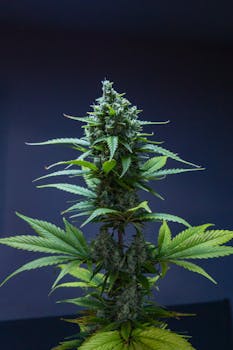
The plant architecture reflects this: narrow leaves, long internodal gaps, and a height that can exceed 3 meters outdoors with no training. Their loose bud structure also makes them more resistant to mold in humid climates.
Terpene profiles lean toward limonene, terpinolene, and pinene, associated with focus and energy. But again, the cannabinoid-terpene profile of a specific cultivar matters more than the "sativa" label alone.
Outdoor growers with large plots, especially those running outdoor cannabis seeds in long-summer climates, often get the most out of sativa genetics. The extended finish time translates to bigger plants, heavier tops, and massive dry weight per plant.
Indica vs Sativa Growing Differences: What Actually Changes in Your Grow Room
This is where the rubber meets the road for most cultivators. The plant type you choose affects nearly every parameter in your grow, space, light schedule, feeding, and timing.
Plant Height and Canopy Management
Indicas typically top out at 60–120 cm indoors. Sativas regularly hit 150–250 cm in the same conditions, and in some cases can stretch to 300+ cm outdoors. In a standard 2.4 m tent, a pure sativa in flower will brush the ceiling before week 5.
We've grown sativa-dominant plants in 2 m tents and spent more time bending and defoliating than actually tending to the plants. Indicas in the same space needed maybe 1–2 LST sessions and left us 50+ cm of clearance at harvest.
Flowering Time
Indica: 7–9 weeks from flip to harvest. Sativa: 10–16 weeks. Hybrids typically land at 8–11 weeks. That difference compounds over a year, in a fixed indoor cycle, you could fit 5 indica harvests in the time it takes a true sativa to finish 3.
Feeding and EC Windows
Indicas tend to be slightly more sensitive to high EC. In our indoor runs, we keep indica feeding at EC 1.8–2.2 mS/cm in peak flower. Sativas, with their longer growth window, can handle EC 2.0–2.6 mS/cm mid-flower without tip burn, though you'll still want to watch individual phenotype responses.
Feeding EC Quick Reference
Indica peak flower: EC 1.8–2.2 mS/cm
Sativa peak flower: EC 2.0–2.6 mS/cm
Flush window: EC 0.4–0.6 mS/cm for final 7–10 days
Light Requirements (PPFD)
Both types respond well to 600–900 PPFD during veg, and 900–1,100 PPFD during flower. Where sativas differ: their open canopy structure allows light to penetrate lower bud sites more efficiently, reducing the need for aggressive defoliation at identical PPFD levels.
Side-by-Side Grow Parameter Comparison
Parameter
Indica
Sativa
Indoor Height
60–120 cm
150–250 cm+
Flower Time
7–9 weeks
10–16 weeks
Leaf Width
Wide, dense
Narrow, open
Bud Density
Dense, compact
Airy, elongated
Peak EC (flower)
1.8–2.2 mS/cm
2.0–2.6 mS/cm
Mold Resistance
Moderate (dense buds)
Higher (airy structure)
Best For
Indoor, small spaces
Outdoor, large indoor
Typical THC Range
18–28%
16–26%
Indica vs Sativa Effects: What the Data Actually Shows
The classic divide, indica for body, sativa for head, holds up as a rough guide, but it's far less binary than most people assume.
Research published in the Journal of Cannabis Research found that indica and sativa labels were poor predictors of subjective effects when terpene profiles weren't controlled for. What actually drives the effect profile is the combination of THC, CBD, CBG, and the terpene matrix, not the plant type classification on its own.
That said, terpene profiles do correlate loosely with plant type. Most modern indica cultivars express higher myrcene (0.4–1.2% on tested samples), while sativa cultivars more frequently show elevated terpinolene and limonene. Myrcene has been associated with sedation and muscle relaxation in multiple studies, which is where the "body stone" reputation comes from.
Key caveat: a high-myrcene sativa will lean indica-like in effect. A low-myrcene indica won't necessarily sedate. Lab reports matter more than labels.
For growers, this means you should be reading lab data on your chosen cultivar, not trusting the "sativa" or "indica" designation in isolation. If you're growing high THC cannabis seeds, the terpene breakdown on the cultivar page will tell you far more than the species classification.
Indica vs Sativa Yield and Potency: Which Produces More?
Indicas win on indoor yield per square foot in most controlled environments. Their dense bud structure and efficient canopy fill mean more grams per watt under the same lighting setup.
In our indoor facility, well-dialed indica phenotypes have returned 450–600 g/m² under 600W HPS or equivalent LED. Comparable sativa-dominant plants in the same space typically return 300–450 g/m², but only when the canopy is properly trained. Without training, sativas get leggy and light penetration drops sharply.
Outdoors, sativas flip the equation entirely. A full-season sativa in an open plot can return 600–1,200 g per plant, sometimes more on exceptional phenotypes. Indicas outdoors cap out around 400–700 g per plant in most climates.
Yield Benchmarks by Environment
Indica indoors: 450–600 g/m² (600W equivalent)
Sativa indoors: 300–450 g/m² (requires LST/SCROG)
Indica outdoors: 400–700 g per plant
Sativa outdoors: 600–1,200 g per plant (full season)
On potency, modern cultivars from both categories regularly test above 22% THC. The notion that sativas are "weaker" is outdated, many current sativa strains test at 24–26% THC or higher, comparable to top indica lines.
Some widely repeated claims about indica and sativa are flat-out wrong, and believing them costs growers yield, time, and money.
MYTH
Indicas always sedate, sativas always energize, no exceptions.
REALITY
Effect is driven by the full cannabinoid-terpene profile, not classification. A high-limonene indica can feel more energetic than a high-myrcene sativa.
MYTH
Sativas are harder to grow than indicas.
REALITY
Sativas are harder to manage in small spaces. In terms of pest resistance, nutrient response, and disease tolerance, they're comparable to indicas, sometimes hardier.
MYTH
Sativas yield less overall.
REALITY
Sativas yield less per square foot indoors. Outdoors, they regularly outproduce indicas per plant by 2–3x when given a full growing season.
MYTH
Pure indicas and pure sativas are common in the seed market.
REALITY
Almost everything sold today is a hybrid. "Indica-dominant" or "sativa-dominant" is a more accurate description. True landraces are rare outside of preservation projects.
Real Grow Comparison: Indica-Dominant vs Sativa-Dominant Side by Side
To make this concrete, here's how two cultivars from our catalog compare across a full indoor grow cycle. We ran these in the same 1.2 m x 2.4 m tent under 600W LED, same medium (coco/perlite 70/30), same base nutrients.
Critical Kush (Indica-Dominant)
Height at harvest: 85 cm
Veg: 3 weeks, Flower: 8 weeks
Total cycle: 11 weeks
Peak EC: 2.0 mS/cm
Dry yield: 520 g/m²
THC: ~21%, Myrcene: 0.82%
Canopy work: 2 LST sessions
Effect profile: heavy physical relaxation, 2–3 hr duration
The Critical Kush feminized outpaced Hawaiian Snow on grams per square meter, but the Hawaiian Snow feminized tested higher on THC and had a noticeably different terpene-driven effect. The better plant depends entirely on what you're optimizing for.
If that same Hawaiian Snow run had gone outdoors with a full season, our estimate based on plant structure would be 900–1,100 g per plant. In a tent, it was fighting its own genetics.
How to Choose Between Indica and Sativa Seeds: A Step-by-Step Framework
Stop choosing by desired effect and start choosing by grow environment. Here's the framework we actually use when selecting genetics for a new run.
Step 1: Measure your available grow height
Subtract 60 cm for your light, reflector, and air circulation. Whatever's left is your usable plant height. If that number is under 120 cm, you're in indica territory. If it's over 180 cm, a sativa-dominant hybrid becomes viable, but you'll still need training.
Step 2: Determine indoor vs outdoor
Indoor setups almost always favor indica-dominant genetics. Outdoor grows in climates with summers lasting past October can accommodate full sativa flowering times. If your outdoor season ends before October, lean indica or look at fast flowering seeds that finish in 7–8 weeks.
Step 3: Set your cycle frequency goals
If you want 4–5 harvests per year from a perpetual setup, indicas give you that. If you're running one or two cycles a year and want maximum yield per cycle outdoors, sativa-dominants earn their keep. Be specific: map out the calendar before you order seeds.
Step 4: Check the terpene profile, not just the category
If the end-use effect matters to you, or your customers, look at the dominant terpenes listed for the cultivar. A strain showing myrcene above 0.5% will trend sedative regardless of category label. Terpinolene, limonene, and pinene above 0.4% trend stimulating. You can read our full breakdown of how to choose cannabis seeds for a deeper dive on this.
Step 5: Factor in your experience level
First-time growers almost always have a better run with indica or indica-dominant hybrids. Shorter plants, faster feedback cycles, and more forgiving canopy management means fewer costly mistakes in the first season. Our beginner cannabis seeds section leans heavily indica for exactly this reason. For more structured guidance, see our post on best autoflower seeds for beginners.
Decision Checklist
Available height < 120 cm: choose indica
Outdoor season ends before October: choose indica or fast-flower
4+ harvests per year goal: choose indica
Outdoor long-season, large space: sativa viable
First-time grower: start with indica-dominant
High-THC target above 24%: check specific cultivar, both types can qualify
After years of watching growers pick the wrong genetics for their space, we've narrowed the mistake down to one root cause.
"Choose your cannabis seeds based on your grow space first, your desired effect second. A sativa in a 1.2 m tent is a management problem before it's ever a pleasure. An indica in a full-season outdoor plot is 50% of the potential yield left on the table."
The effect you want is achievable in both categories if you pick the right cultivar within the type. The grow constraints are not flexible. Match the plant to the space first, everything else follows.
Strong indica-dominant options that don't sacrifice on effect quality include OG Kush feminized, Kraken feminized, and Jupiter OG feminized, all well under 100 cm indoors with strong THC expression. If you want something that bridges the gap, Gigabud feminized runs indica-dominant with a slightly taller structure and high indoor yield.
For sativa-forward options, our sativa strain catalog includes cultivars that have been selected specifically for manageable indoor growth patterns, bred to bring the sativa effect profile without the full 3-meter stretch. Worth browsing if you're committed to the type but working indoors.
What Research Says About Indica and Sativa Classification
The "indica vs sativa" binary has come under increasing scrutiny from researchers. A landmark study published in PLOS ONE (McPartland & Guy, 2017) found that the genetic divergence between indica and sativa populations had been significantly overestimated, and that most commercial cultivars share substantial genetic overlap regardless of their classification.
More practically, research from the Frontiers in Psychiatry journal tracked user-reported effects across 289 cannabis products and found that terpene composition, not the indica/sativa label, was the stronger predictor of reported sedation versus energy. Myrcene and linalool correlated with sedation; terpinolene and ocimene with stimulation.
For growers, this research reinforces the practical takeaway: use the indica/sativa distinction as a guide to plant morphology and grow characteristics. Use the specific cultivar's terpene and cannabinoid data to predict effects.
Frequently Asked Questions
Is indica or sativa better for beginners?
Indica-dominant strains are better for beginners in almost every scenario. They stay under 120 cm indoors, finish in 7–9 weeks, and respond more forgivingly to minor feeding mistakes.
Sativas require more canopy management skill and take significantly longer to finish, which means more weeks of potential error. If you're new, start with a compact indica strain and move to sativa genetics once you've dialed in your environment.
Do indica seeds grow faster than sativa seeds?
Yes. Indica strains flower in 7–9 weeks compared to 10–16 weeks for most sativa-dominant cultivars. Total cycle time from seed to harvest is typically 11–13 weeks for indicas versus 15–20 weeks for sativas.
This matters most if you're running multiple cycles per year. If annual harvest count is a priority, fast flowering seeds with indica genetics are the most efficient option.
Why doesn't my indica feel relaxing?
Low myrcene content is the most likely explanation. If the cultivar's dominant terpenes are limonene or terpinolene rather than myrcene, the effect profile will feel more cerebral even on an indica-labeled plant.
Harvest timing also plays a role. Buds harvested at 60–70% amber trichomes will produce more sedative effects than buds cut at mostly clear or milky trichomes. Check both your cultivar's terpene profile and your harvest window.
Can I grow sativa seeds indoors?
Yes, but it requires active canopy management. Sativa-dominant plants need to be trained early and aggressively, SCROG or repeated LST, to keep height under control in a tent environment.
Aim to flip to 12/12 when plants are at 40–50% of your available tent height, not the usual 60–70% you'd use with indicas. This accounts for the 2–3x stretch that most sativa cultivars show during the first 3 weeks of flower.
Which has higher THC, indica or sativa?
Neither category reliably produces higher THC. Both indica and sativa-dominant cultivars regularly test above 24–26% THC in modern breeding programs. The specific cultivar matters far more than the type classification.
If maximum potency is your goal, focus on high THC cannabis seeds filtered by cannabinoid data, not by indica/sativa label.
What's the best indica strain for indoor growing?
For indoor production, cultivars that stay under 90 cm with strong bud density are ideal. OG Kush feminized, Critical Kush feminized, and Kraken feminized are all strong performers in controlled indoor setups.
Critical Kush feminized in particular has returned 500+ g/m² consistently in our 600W LED grows with an 8-week flower time. It's a reliable baseline for any indica indoor run.
Are all cannabis seeds today hybrid, not pure indica or sativa?
Essentially yes. The vast majority of commercially available seeds are hybrid cultivars with varying degrees of indica or sativa dominance. True landrace genetics, unmodified by selective breeding, exist mainly in specialty preservation collections.
When a breeder labels something "indica" or "sativa," they typically mean it expresses predominantly indica or sativa morphology and effect tendencies, not that it's a genetically pure specimen. "Indica-dominant hybrid" is always the more accurate description.
Ready to choose your genetics?
Browse our full seed catalog, indica-dominant, sativa-dominant, and hybrid strains with full cannabinoid and terpene data.
Aiko comes from a fine-fragrance background and now applies her sensory training to cannabis terpene analysis. She runs blind sensory panels and pairs them with GC-MS chemistry to map terpene-effect relationships.
I specialize in 3 areas…
✦ Share this post
✦ Need a recommendation? ✦
Not Sure Which Seeds Are Right for You?
Ask BudLabz for personalized picks based on your experience, growing setup, and the effects you're after.